By Kamil Zurek · 10 min read
How to build a complete CS2 loadout by budget
Allocate a CS2 inventory budget across high-impact slots without letting one purchase make the rest of the build feel unfinished.
Last materially reviewed: 2026-10-08
On this page
Decide what “complete” means
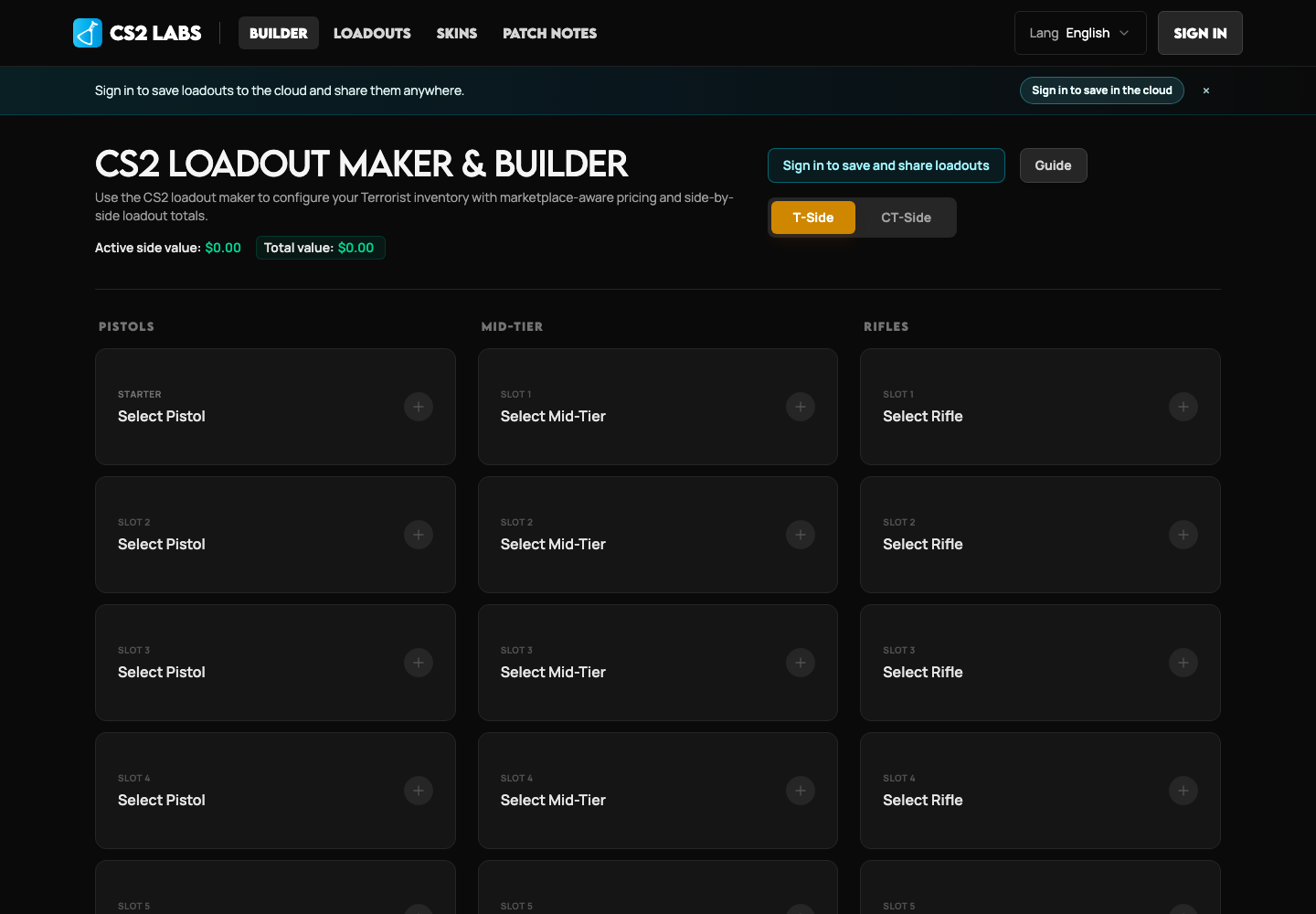
A complete loadout does not need a premium item in every slot. Define the weapons you actually use, whether both teams need equal attention, and whether knife and gloves are part of the first version. This prevents budget being spread across low-impact slots before the core identity is established.
Allocate by visual impact
Begin with rifles and the pistols seen most often. Add an AWP if it is part of your play style. Knife and gloves can dominate the budget, so compare a version with them against a version that improves every weapon skin.
- Core rifles and primary pistols first.
- Reserve a buffer for marketplace movement.
- Use adjacent wear tiers to release budget.
- Keep sticker crafts separate until the base build works.
Worked example: a $250 first version
A practical $250 example might reserve about $120 for the rifles used most often, $55 for primary pistols and mid-tier weapons, $45 for an AWP or another specialist slot, and $30 as a price-movement and craft buffer. This is an allocation exercise, not a claim that every player uses the same weapons.
Build that version before adding a knife or glove pair. Then duplicate it and test the premium item. If the premium version forces most core weapons back to stock or breaks the colour direction, it is an upgrade path rather than the best first purchase. At a larger budget, repeat the same comparison instead of assuming knife and gloves must automatically take priority.
Make three versions
Build a target version, a lower-cost version, and an upgrade path. The lower-cost version reveals which choices carry the theme without relying on one expensive anchor. The upgrade path reduces impulse buying because every future purchase already has a role. Public loadouts are useful here: share each version and ask for feedback on the trade-offs, not just a numerical rating.