By Kamil Zurek · 5 min read
CS2 wear, float, patterns and quality: inspect the exact skin
Compare wear tiers, StatTrak and Souvenir variants, then inspect patterns and high-value listings without confusing catalog data with an exact copy.
Last updated: 2026-10-16
On this page
Wear labels are ranges
A wear label groups a range of float values; it is not a promise that every copy looks identical. Pattern placement, finish behaviour, and the exact float can make two items in the same wear tier look noticeably different. For a visual build, inspect the actual marketplace listing before buying.
CS2 Labs uses wear variants to keep prices comparable. Selecting Field-Tested on one skin should not accidentally be compared with a Factory New price on another.
Choose wear for the build, not the badge
Factory New is not automatically the best choice. Some finishes remain visually strong at higher wear, and the saving may fund a better knife, gloves, or several rifle upgrades. Other finishes lose the exact detail or colour that makes the loadout coherent.
- Start with the appearance you need.
- Compare at least two adjacent wear tiers.
- Spend the saving where it changes the whole build.
- Inspect exact floats for high-value purchases.
Worked example: test the expensive slot first
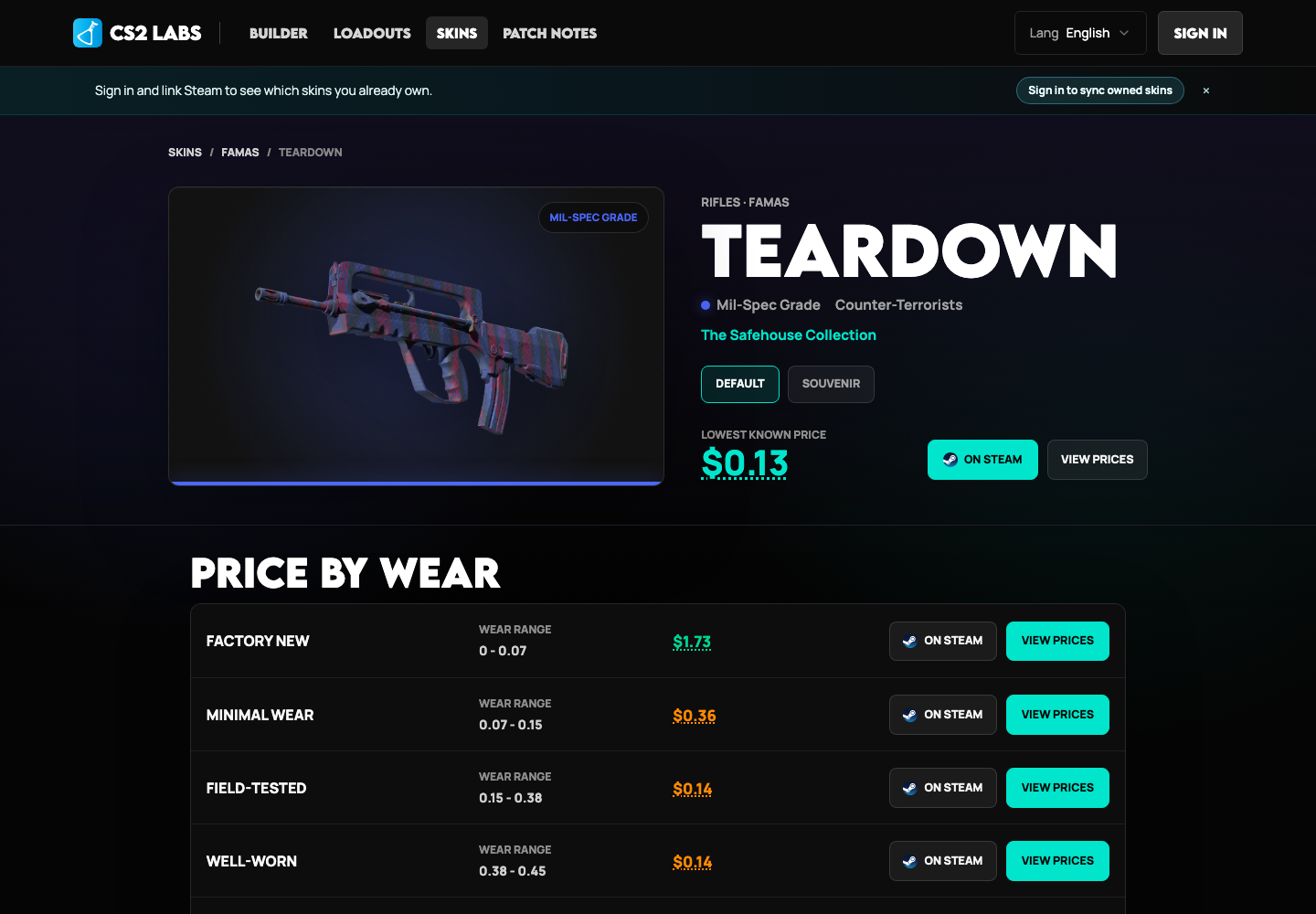
Open a skin such as FAMAS Teardown and compare its available wear rows. Do not copy the current prices into a permanent budget: use the live rows to calculate the saving between the two appearances you would genuinely accept. Repeat that exercise first for the costliest items in the loadout.
If moving one knife or glove pair down a wear tier releases $40 while changing three pistol wears saves $4, the high-value slot deserves the closer visual inspection. If the lower wear damages the finish that anchors the theme, keep it and find savings elsewhere. The exercise is about value to the build, not minimizing every row.
How to compare in the builder
Set a consistent budget first, then test wear changes on the most expensive slots. A small percentage reduction on a knife or glove pair can matter more than optimizing every pistol. Save alternate versions as separate loadouts so the trade-off remains visible instead of being lost during editing.
Quality changes the market being compared
Default, StatTrak, and Souvenir variants should be treated as distinct items. Their supply, available wear tiers, sticker history, and buyer demand can differ substantially. A cheap default listing is not evidence that the corresponding StatTrak variant is affordable.
CS2 Labs keeps quality in the pricing key so loadout totals follow the selected variant rather than borrowing a superficially similar price.
Use StatTrak intentionally
StatTrak is most meaningful when the counter itself matters to the owner. If the goal is purely colour coordination, the premium may be better spent elsewhere. Compare the upgrade against the next most visible improvement in the loadout rather than evaluating it in isolation.
Souvenir needs item-level inspection
Souvenir items can carry event and sticker context that a single catalog image cannot fully explain. Inspect the exact listing, sticker placement, wear, and provenance presented by the marketplace. For planning, keep Souvenir totals separate from default-quality alternatives.
Catalog identity is only the first layer
A catalog page identifies the weapon and finish, but some finishes distribute colour or artwork differently between individual copies. Two items can share the same wear label and still present different areas of the underlying pattern.
Use the catalog render to decide whether the finish belongs in the build. Use the exact marketplace inspect view to decide whether a particular copy does.
Decide whether pattern matters to your goal
Pattern matters most when the desired colour coverage or motif is the reason for choosing the skin. If you simply need a broad colour family at a controlled price, paying for a narrowly preferred arrangement may not improve the complete loadout enough to justify it.
Write down the visible feature you care about: more of one colour on the play side, a centred motif, or a cleaner transition. That makes comparisons concrete and helps avoid paying for a label you cannot personally distinguish.
Compare in the right order
First match finish, quality, and wear. Then compare exact pattern and float. Finally, check price, fees, tradability, and whether the improvement is still visible beside the other items in your loadout.
For any high-value pattern-sensitive purchase, retain screenshots or listing details used in your comparison and verify them again at the destination before committing.
Verify identity before judging value
Confirm the weapon, finish, wear, quality, float, pattern or phase where relevant, and every applied sticker. Similar names and thumbnail images are not enough when one attribute creates a large difference.
Follow the direct destination and repeat the check there. CS2 Labs can help organise the comparison, but the marketplace listing is the transaction record that must match.
Inspect the exact appearance
Use available inspect views to check the play side, reverse side, focal artwork, wear around high-contrast edges, pattern placement, and sticker positions. Compare it with at least one adjacent listing so the premium has a visible reason.
If you cannot explain what you prefer about the exact copy, pause. Scarcity language and a high price do not replace a visual or collection goal.
- Save the exact listing details used for the comparison.
- Confirm tradability and any timing restriction.
- Review final fees and account requirements.
- Never move outside the marketplace flow because of pressure from a stranger.
Reinsert the item into the loadout
After the item passes inspection, compare the complete build with and without it. Record which other upgrades the premium postpones and whether the high-value item still improves what you see most often.
If the purchase depends on appreciation, guaranteed resale, or a deadline imposed by somebody else, it is no longer just a loadout decision. Stop and seek independent current evidence.